
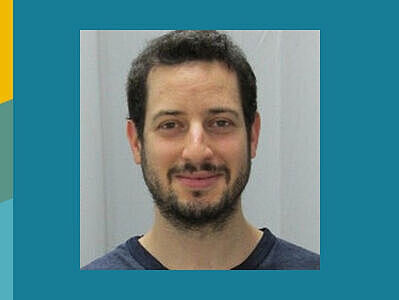
Wir laden herzlich zum CASA Invited Talk am Donnerstag, den 5. Februar 2026 ein. Die CASA Invited Talks dauern in der Regel etwa eine Stunde und werden von einer offenen Diskussion mit dem Publikum gefolgt. Die Reihe zielt darauf ab, den Dialog zu fördern und neue Perspektiven in der Cybersicherheitsforschung zu eröffnen.
Wann: 05.02.2026, 10:00 Uhr
Wo: Open Space, MC (EG)
Online teilnehmen: Zoom-Webinar
Abstract: The wide adoption of deep neural networks (DNNs) raises the question of how can we equip them with a desired cryptographic functionality (e.g, to decrypt an encrypted input, to verify that this input is authorized, or to embed a secret backdoor which alters the DNN's normal operation). The problem is that cryptographic primitives are typically designed to run on digital computers that use Boolean gates to map sequences of bits to sequences of bits, whereas DNNs are a special type of analog computer that uses linear mappings and ReLUs to map vectors of real numbers to vectors of real numbers. This discrepancy between the discrete and continuous computational models raises two fundamental questions: How can we implement standard cryptographic primitives as DNNs, and whether DNN implementations of secure cryptosystems remain secure in the new setting, in which an attacker can ask the DNN to process a message whose ``bits'' are arbitrary real numbers. In this paper we lay the foundations of this new area of research, defining the meaning of correctness and security for implementations of cryptographic primitives as ReLU-based DNNs. We then show that the natural implementations of block ciphers as DNNs can be broken in linear time by using such nonstandard inputs (this attack was experimentally tested in the case of full round AES-128, and had 100% success rate). Finally, we develop a new method for implementing any desired cryptographic functionality as a standard ReLU-based DNN in a provably secure and correct way. Our novel protective technique has very low overhead (a constant number of additional layers and a linear number of additional neurons), and is completely practical.
Based on joint work together with David Gerault, Anna Hambitzer, and Adi Shamir that will be presented at Eurocrypt 2026.
Bio: Eyal Ronen is a faculty member at Tel Aviv University’s School of Computer Science. My research interests are in cybersecurity and applied cryptography. I am interested in analyzing and designing real-world implementations of cryptographic and security protocols and primitives (both in software and hardware). In particular, my research spans side-channel attacks (e.g., power analysis and cache attacks), cryptographic protocols (e.g., TLS and WPA3), cryptanalysis of cryptographic primitives (e.g., AES), machine learning security, IoT security, and password-based authentication.
General note: In case of using gender-assigning attributes we include all those who consider themselves in this gender regardless of their own biological sex.
